
Kooply Run™: Play and Create!
KOOPLYArcade
4.1292.00 Reviews
- Version
- 2.200
- Installs
- 50.00M
- Age Rating
- Everyone
Screenshots
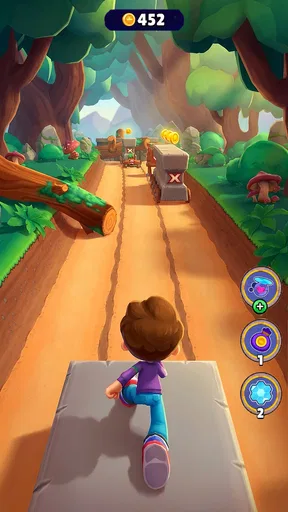
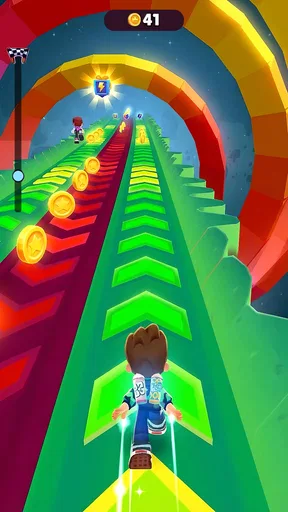
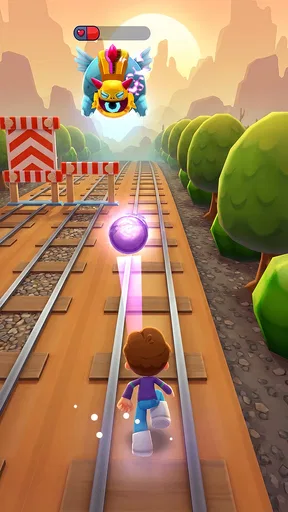
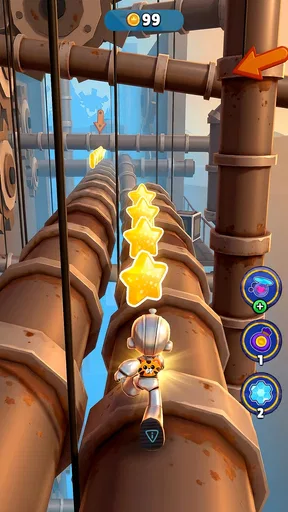
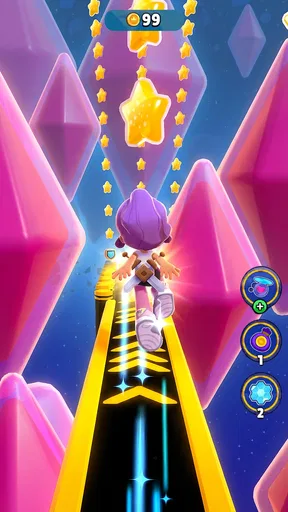
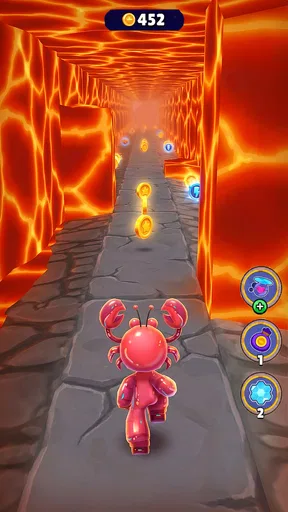
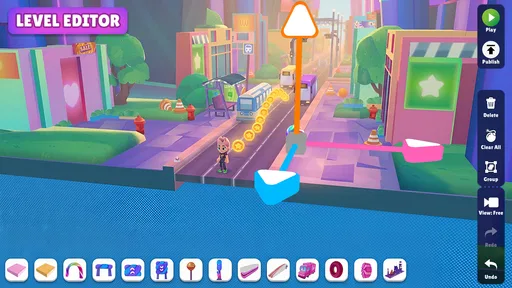
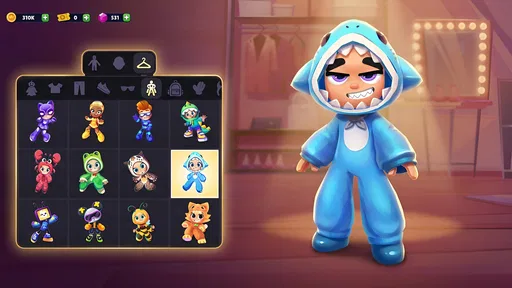
Our Review of Kooply Run™: Play and Create!
 Analysis by Appyee
I approached Kooply Run™ as a quick arcade game first, but its creator-focused side changes the experience more than I expected. It is built around running through levels while also letting players make and share their own stages, so it sits somewhere between a traditional endless runner and a lightweight level playground. That combination gives it more staying power than a game based only on repeating the same route.
The basic appeal is easy to understand: start playing immediately, react to obstacles, improve your timing, and then move from consuming levels to building them. I found that the two sides support each other. Playing teaches you what makes a level readable and enjoyable, while creating gives you a reason to look more closely at pacing, difficulty, and the placement of hazards.
It is a free game from KOOPLY, rated for Everyone, and its arcade design makes it approachable for short sessions. The current version is 2.189, and the game has already passed 50 million installs, with an average score of 4.3 from a large player audience. Those figures suggest that it has reached far beyond a small experimental community, but popularity does not automatically make it a good fit for every player. The real question is whether you want a simple runner, a creative tool, or a mixture of both.
How the current version feels to play
I’d use this section to focus on how the game’s two roles shape a session: running offers a quick way in, while making and testing a stage asks for more deliberate attention. I’d also consider how version 2.189 fits into that experience without assuming what any update changed. From there, the next section can turn to practical checks that may help when getting started.
A runner that rewards short, focused sessions
My first recommendation is to treat the running portion as a game of concentration rather than something to leave playing in the background. The appeal comes from responding to what appears in front of you, learning from mistakes, and gradually becoming more consistent. That makes it suitable for a quick break, a commute, or a few minutes before bed, provided you are comfortable with repetition and restarting after failed attempts.
Arcade runners usually live or die by the quality of their moment-to-moment rhythm. In this case, the level-creation idea gives the format an extra layer. You are not limited to asking whether you can survive a preset challenge; you can also think about why a particular section feels fair, surprising, or frustrating. That makes the game more interesting for players who enjoy observing design details instead of simply chasing a high score.
I would not describe it as a replacement for a large platform adventure or a story-driven game. There is no reason to approach it expecting deep narrative progression or the broad exploration of a console-style title. Its strength is immediacy. You can open it, understand the central activity quickly, and decide for yourself whether to keep playing or experiment with creation.
What the creation side adds
The ability to craft levels is the feature that separates this game from a standard endless runner. Even if you never become a serious creator, making a small stage can change how you play other people’s work. You begin noticing whether an obstacle arrives with enough warning, whether a sequence feels repetitive, and whether difficulty comes from genuine timing or from an awkward surprise.
My practical advice is to begin with a compact idea rather than trying to build a huge challenge immediately. A short level with a clear opening, a rising middle section, and a satisfying finish is easier to test and revise. It also helps you understand the editor without turning the first attempt into a frustrating project. The best use of the creation tools is not to place as much as possible; it is to make every section serve a purpose.
Sharing adds a social dimension, but it also creates a quality-control problem. Player-made content can be more varied than professionally arranged stages, which is exciting when you discover something clever and disappointing when a level feels unfinished. I recommend judging a shared stage by its design choices rather than assuming that a difficult level is automatically a good one. Fair warning, readable patterns, and a sense of progression matter more than raw punishment.
A useful workflow for new creators
There is a simple workflow that made the creative side less overwhelming for me. First, play several levels with different pacing. Next, identify one idea you want to borrow in principle, such as a sudden change in rhythm or a sequence that teaches before it tests. Then build only that idea, play it repeatedly, and remove anything that distracts from it.
Testing from the beginning is especially important. A section that looks logical while editing can feel much harder once you approach it at full speed. I also found it useful to ask whether a player can understand the intended route without already knowing the level. If the answer is no, the challenge may be based on surprise rather than skill. That distinction is important in a game aimed at a broad audience.
Another worthwhile habit is to make a level for a specific type of player. A gentle introduction can work well for younger players or someone trying the game for the first time, while an expert challenge can focus on precise timing. Designing with a clear audience in mind prevents the common mistake of making a stage that is merely difficult without being enjoyable.
How it fits into everyday use
Imagine having ten minutes between appointments. A conventional arcade game may give you a quick distraction, but you might stop thinking about it as soon as you close the app. Here, you can spend one session playing, another examining a level you liked, and a later session adjusting your own creation. That variety makes the short-session format feel less disposable.
It can also work well as a casual activity shared with family members. One person can play a stage, another can suggest where an obstacle should go, and a younger player can focus on discovering levels rather than building them. Because the age rating is Everyone, the game is positioned for broad accessibility, although individual tolerance for fast reactions and repeated failure will still vary.
For me, the strongest everyday use is the transition between passive and active play. When I only have a moment, I can run a level. When I have more patience, I can think about construction and testing. That flexibility is more meaningful than simply having a large amount of content, because it lets the game match my available attention.
Where it differs from familiar alternatives
Compared with a conventional endless runner, this game offers a stronger reason to return after the initial novelty fades. A traditional runner usually asks you to improve within a fixed framework, while this one also invites you to explore what other players have made and try building something yourself. That is its clearest advantage.
Compared with a dedicated level editor or a full platform-game creator, however, it is likely to feel more focused and less expansive. The runner format keeps the experience approachable, but it also means that creators looking for a highly detailed design environment may eventually want something more specialized. I would choose this game for fast experimentation and immediate play, not for building a complex, long-form project.
It also differs from score-focused arcade games because success is not limited to personal performance. You can enjoy the game as a player, a designer, or someone who likes judging how a challenge has been put together. That broader identity is valuable, though it can make the experience feel less directed if you prefer a clear campaign with a fixed sequence of goals.
What the current release means for existing players
The current version, 2.189, tells existing users that the game is being maintained as an ongoing product rather than treated as a one-time release. I would still separate that fact from assumptions about future additions. A version number shows continued iteration, but it does not guarantee a particular feature, balance change, or new creation tool.
For someone already playing, the sensible approach is to revisit the game with two questions in mind: does the running remain enjoyable, and does the creation-and-sharing loop give you a reason to return? If both answers are yes, the current state has enough variety to support regular casual play. If you only enjoy one side, your experience may depend heavily on whether that part continues to receive attention.
New users should not feel pressured to understand every part immediately. I would spend the first session learning the movement and level rhythm, then explore creation once the basic challenges feel familiar. Starting with the editor before understanding how the game communicates danger can lead to stages that are technically busy but difficult to read.
Costs, access, and practical expectations
The game is free to download, which makes trying it straightforward. It includes in-app purchases ranging from $0.49 to $99.99 per item, so I would approach optional spending carefully and decide in advance whether you want to keep the experience entirely free. The presence of purchases does not by itself determine the quality of the core game, but it is worth remembering when a casual session turns into a longer habit.
The minimum operating-system requirement is Android 7.1, which gives it a relatively broad compatibility range for Android users with older devices. Even so, compatibility and comfort are not identical. A device may run the game while still offering a less pleasant experience because of screen size, touch response, or general performance. If precise reactions matter to you, those practical details can affect enjoyment more than the store rating.
The Everyone content rating also makes it easier to consider for a shared household device. I would still supervise younger players if purchases are enabled, not because the rating makes the game unsuitable, but because free-to-start games can encourage browsing beyond the initial download. Keeping spending decisions separate from spontaneous play is a sensible habit for any family.
Remaining gaps and possible friction
The biggest limitation is that player-created content naturally varies. A polished stage can make the concept feel fresh, while a poorly paced one can make the game seem unfair or repetitive. That inconsistency is not a minor detail; it is the trade-off for opening the experience to community creativity. Players who want every level to have the same level of refinement may prefer a more tightly curated arcade game.
Creation can also be more demanding than the short-session format suggests. Playing a level is immediate, but making one requires planning, testing, and editing. Someone looking only for a quick distraction may never use the creator, and that is perfectly reasonable. The game’s broader design does not mean every feature will appeal equally to every player.
Another potential weakness is the risk of creative overload. When a game offers many possible directions, it can be harder to know what to do next than in a linear arcade title. I found that setting a small personal goal helped: finish one challenge, test one design idea, or discover a few stages with a particular style. Without that kind of limit, browsing and experimenting can become less satisfying than focused play.
I would also skip it if your priority is a deep offline-style adventure, a strong narrative, or a highly competitive ranking system. The game’s appeal is experimentation within an arcade framework. Players who want a carefully authored journey or a specialized creation suite may find another category a better match.
What I would watch as the game evolves
The most important area to watch is the relationship between creation and discovery. As the player base grows, finding worthwhile stages becomes increasingly important. A strong browsing experience can turn a large library into a source of inspiration; a weak one can make good work difficult to notice. I would pay attention to how easily players can identify stages that are readable, inventive, and suited to their skill level.
I would also watch whether updates continue to improve the creator’s learning curve. New tools are useful, but clear feedback and sensible testing matter just as much. A creator who understands why a stage fails is more likely to improve it than one who simply receives a vague result. That is especially important for younger or first-time designers.
Balance will matter as well. The game needs to remain approachable for someone who only wants to run, while still giving experienced players enough room to create challenging work. If future development leans too far toward one group, the other may feel overlooked. The best direction would preserve the quick arcade entry point while making the creative loop more rewarding for returning users.
My recommendation
I recommend Kooply Run™: Play and Create! to players who like fast arcade action but want more ownership than a standard runner provides. It is particularly appealing if you enjoy testing ideas, sharing stages, or studying why a level feels fair. The free entry point makes it easy to try, and the combination of playing and creating gives it more personality than a runner built around repetition alone.
I would be more cautious if you dislike restarting, have little interest in user-created content, or expect a polished, linear adventure. The game’s variety comes with unevenness, and the creator side asks for patience that a purely casual player may not want to give. In my experience, it works best when I treat it as a flexible arcade playground rather than a single, tightly structured campaign.
Overall, KOOPLY has built a game that is easiest to appreciate after moving beyond the first few runs. The immediate action gets you started, but the level-making and sharing loop is what gives the experience a longer tail. My advice is to play first, create something small second, and judge the game after trying both roles. That is where its current identity becomes clear: not just an endless runner, but a place to play with the rules of one.
Privacy and Permissions
See what permissions an app requests and how it handles your data.
- Phone
- read phone status and identity
- Photos/Media/Files
- read the contents of your USB storage, modify or delete the contents of your USB storage
- Storage
- read the contents of your USB storage, modify or delete the contents of your USB storage
- Wi-Fi connection information
- view Wi-Fi connections
- Device ID & call information
- read phone status and identity
- Other
- view network connections, full network access, control vibration, prevent device from sleeping, Google Play license check
Verdict
Strengths of Kooply Run™: Play and Create!
- Simple controls make it easy for new players to start running quickly.
- Creative tools let players build and share their own challenge levels.
- Short runs work well for quick gaming sessions on mobile.
- Bright visuals and playful animations give the game a cheerful feel.
- User-created content can provide more variety than the built-in stages.
Limitations of Kooply Run™: Play and Create!
- Some user-made levels may vary greatly in quality and difficulty.
- Creating levels can feel limited compared with dedicated game editors.
- Online features may require a stable connection to work properly.
- Repeated runs may become familiar if new community content is scarce.
- Younger players may encounter unsuitable names or shared content online.
Similar Picks in This Category
View All
Subway Surfers
SYBO Games4.6

Stickman Party 234 MiniGames
PlayMax Game Studio4.6

Subway Princess Runner
Ivy4.4

Temple Run
Imangi Studios4.2

Zombie Tsunami
Mobigame SAS4.6

Stack Ball - Crash Platforms
CASUAL AZUR GAMES4.5
Frequently Asked Questions
What is Kooply Run™: Play and Create!?
Kooply Run™: Play and Create! is a mobile game focused on short, fast-paced running challenges combined with user creativity. Players can run through obstacle-filled levels, collect rewards, avoid hazards, and explore content created within the game. Its appeal comes from mixing arcade-style action with creation tools, giving you more to do than simply complete a fixed set of developer-made stages.
Is Kooply Run™: Play and Create! free to download and play?
The game can generally be downloaded without an upfront purchase, but availability of optional in-app purchases may depend on the platform and region. These purchases can include cosmetic items, extra content, or other enhancements. Before downloading, parents and players should review the store listing and device settings, especially if the game will be used by children, because accidental purchases may be possible.
Does Kooply Run™: Play and Create! require an internet connection?
Some parts of Kooply Run™ may work without a constant connection, particularly basic gameplay that has already been installed. However, online access may be needed for downloading updates, accessing community-created levels, sharing creations, synchronizing progress, or using other connected features. The exact offline functionality can vary after updates, so it is best to test the game before relying on it during travel or in areas without reliable internet.
Can children safely play Kooply Run™: Play and Create!?
Kooply Run™ can be suitable for younger players who enjoy colorful arcade games and creative activities, but adults should still check the available communication and community features. User-created content may not always be consistent in style or appropriateness, and advertisements or in-app purchases may also be present. Parents should review the age rating, enable purchase restrictions, and supervise online interactions when necessary.
What devices are compatible with Kooply Run™: Play and Create!?
Compatibility depends on the current Android or iOS requirements published by the developer. Performance may differ considerably between newer and older phones or tablets, especially when levels contain many visual effects or user-generated elements. Before installing, check the official store page for the required operating-system version, available storage, and any device restrictions. Keeping your system and the game updated can also help prevent crashes or loading problems.
Play our best games!


